
Lower scaffolding spend on visual inspections
Drone imagery of flare tips and spring cans removes the need to scaffold just to look.


Octane enables autonomous drone inspections of tank roofs, valves and dikes, so operators climb and drive only when work is needed.
Pumpers drive to each tank and climb to look at roofs, vents and gauges, even when nothing needs work.
A few days of scaffolding for a single close look can cost $20,000 to $30,000.
A roof inspection can mean climbing in breathing gear, because floating roofs can hold hydrocarbon vapours.
Ponding, a failing spring can or flare-tip damage can grow for months before the next look.
Docked drones capture roofs, stacks and spring cans on a set schedule, without scaffolding or a climb.
Drone imagery of flare tips and spring cans removes the need to scaffold just to look.
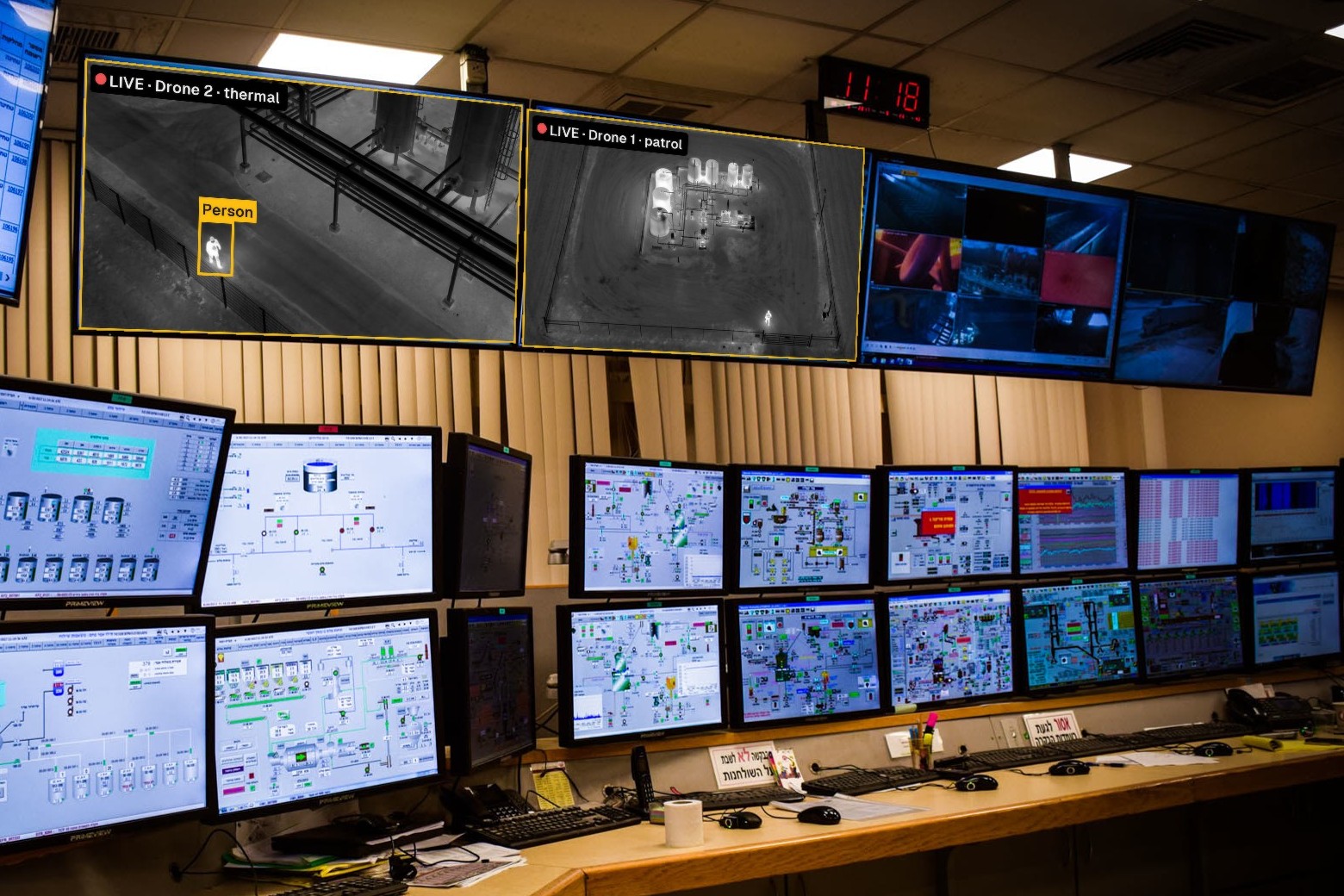
Operators review roof, vent and gauge images from the control room and climb only for repairs.
 T-104 · Ponding
Repeat views of each roof and stack show ponding, corrosion or damage before it grows.
Working with Bronto, a Gulf Coast refinery uses docked drones for tank inspections, spring-can inspections and incident response.
Read the full case study
Rather than replacing the inspectors, the goal is to give them better information, so they can work quicker, more frequently and with less safety risk.”
 Wade LaicheDigital Site Lead, Bronto
A 12-hour climb on each coker derrick
45 minutes from the dock
Operators climb dozens of tanks one at a time
Every tank captured in one flight, with data within an hour
30 minutes to an hour before a pilot reaches site
Live video in under five minutes
Tank farms, process units and the fence line each need different checks, and every finding goes to the unit that owns the equipment.
Once one use case works, every unit team wants flights, and the drone team must plan, review and report each one.
The tank owner, operations and inspection teams each send requests, and one drone team plans and flies every mission by hand.
Each tank's size, roof type and fittings need their own capture plan across hundreds of tanks.
Each round adds hundreds of tank photos, and the team still filters them by hand.
Every round's findings must be copied into the site's report template before anyone can act.
Each unit team requests its own rounds and gets the report back, without every request going through the drone team.
A new refinery or terminal brings new unit teams, a fresh IT and OT security review and new approvals to secure.
Forward deployed engineers set up each unit's use cases, write the SOPs and train the unit team.
Deploy in the cloud, on-premise or air-gapped, with audit reports and engineers on hand for the review.
 MidcontinentGulf CoastAlberta
RotterdamArabian GulfAustralia
Local partners supply pilots, maintenance and approvals, so a new terminal starts without new hires.
Let's shape the right operating model together, connecting your drones, data, systems and teams on one platform.
Our team will get back to you soon.
Share a few details and an Octane specialist will get in touch
Our team will get back to you soon.
Enter your name and work email, and the download starts right away.